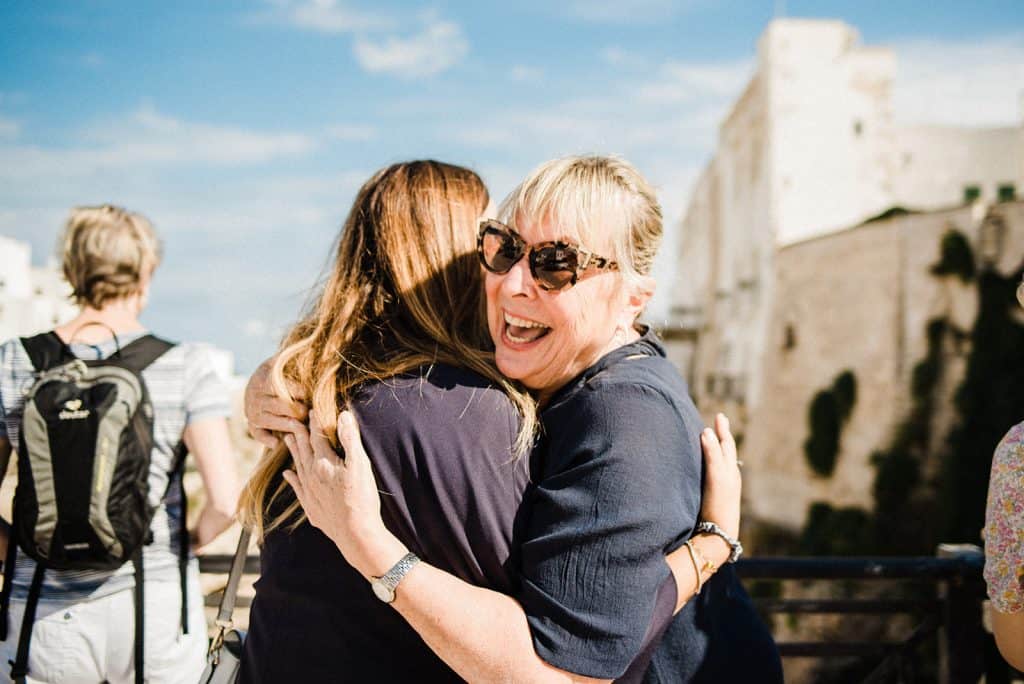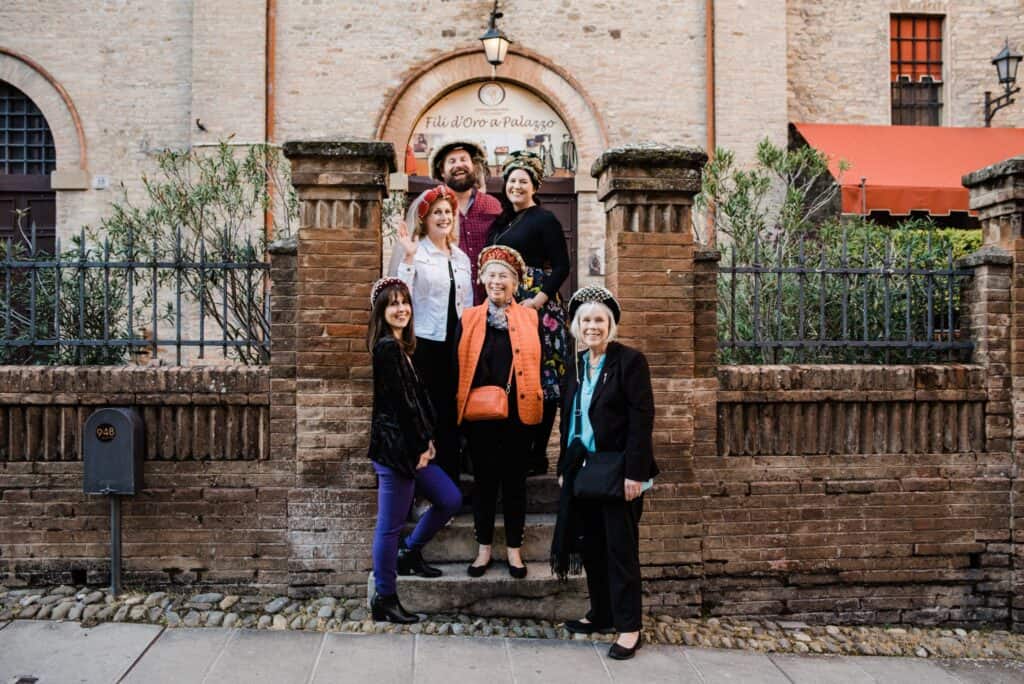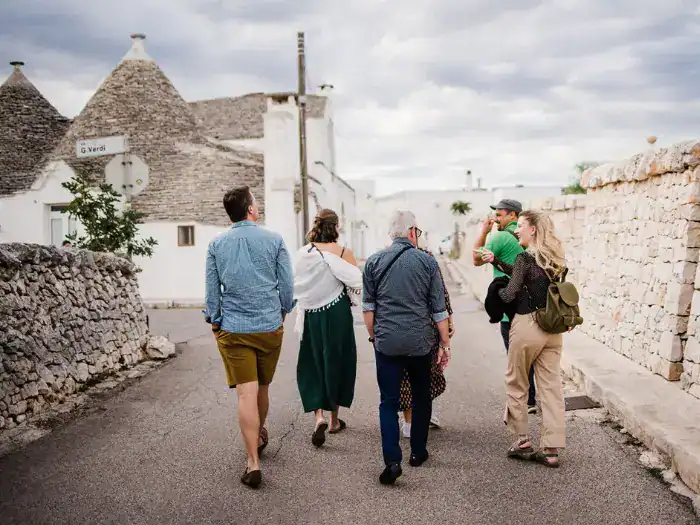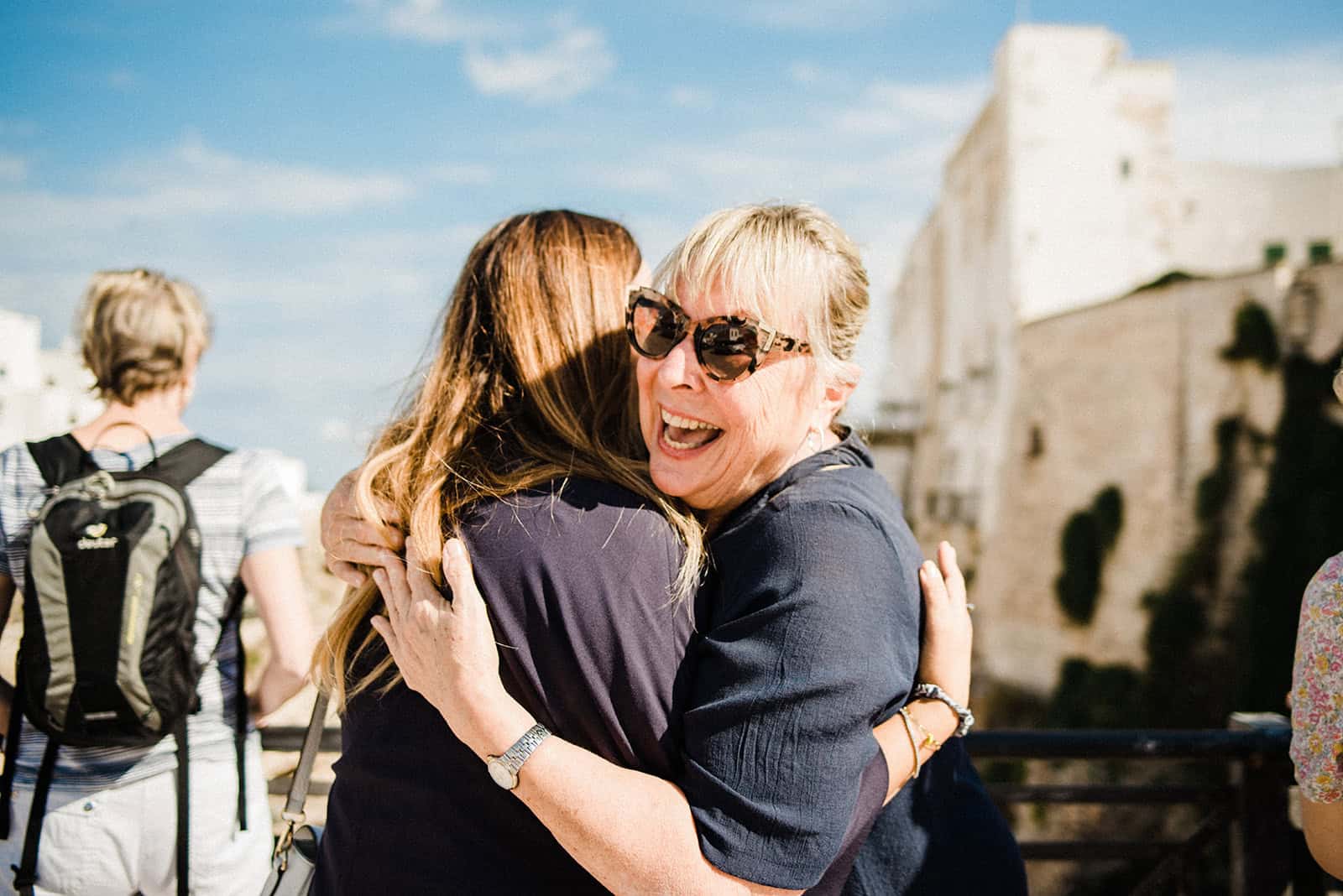
You want to feel part of Italy, not race through it ticking off a checklist. That has always been the Untold Italy Way and it shapes every decision we make, from where we take you and who we introduce you to, to how we travel through a place and who we spend money with along the way.
Small restaurants, family producers, towns where daily life still happens: these only stay real when visitors tread lightly. That is not simply a nice idea. We believe it’s our responsibility.
To hold ourselves to it, we are building our approach around a recognized framework: the Global Sustainable Tourism Council Tour Operator Standard. It rests on four pillars: cultural heritage, benefits to local communities, the environment, and how a tour business is run.
Here is what each one means on an Untold Italy tour.
Respecting the culture you came to enjoy
On an Untold Italy tour, culture is not a backdrop. It is the entire reason the tour exists. The way we respect local culture is through meeting local people and participating in and honoring their traditions, festivals, and their cuisine. Our local hosts provide context that transforms your experience, helping you gain a genuine appreciation and understanding of the people and the place you are visiting.
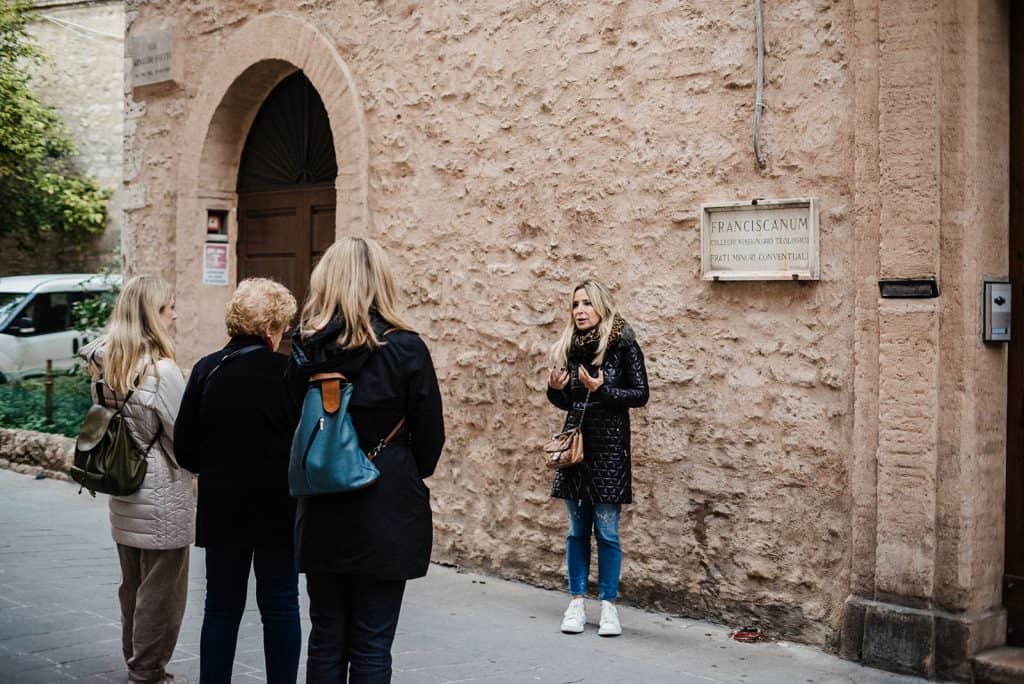
We start by designing our tours around individual regions, because Italian culture at its core is regional. Piemontese culture is completely different to Ligurian, which is worlds apart from Sicilian. In each region, you travel with local guides who share their own stories rather than a rehearsed script, and with local hosts who speak fluent Italian and can translate a conversation with an artisan or a winemaker so nothing is lost in the exchange.
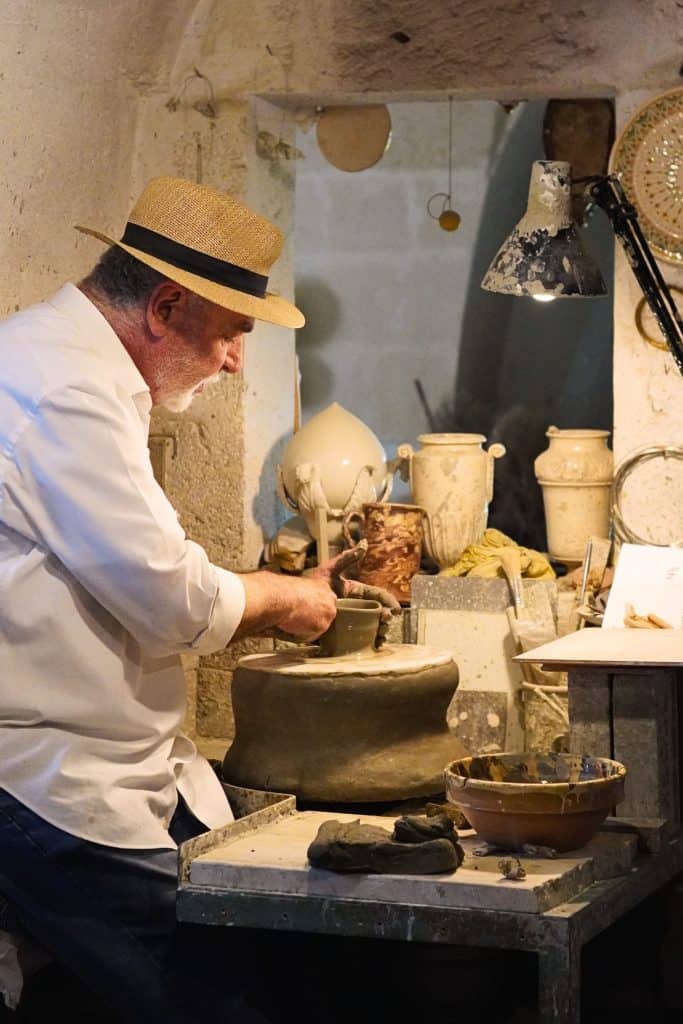
Meeting local artisans is an important part of every Untold Italy tour. Artisan traditions are the backbone of local culture and the communities that keep them alive. These visits allow local people to tell their own stories and share their culture directly with you. In Sardinia, we sit with one of the last women in the world who knows how to make Su Filindeu, a pasta so rare and so labor-intensive that only a handful of people still produce it.
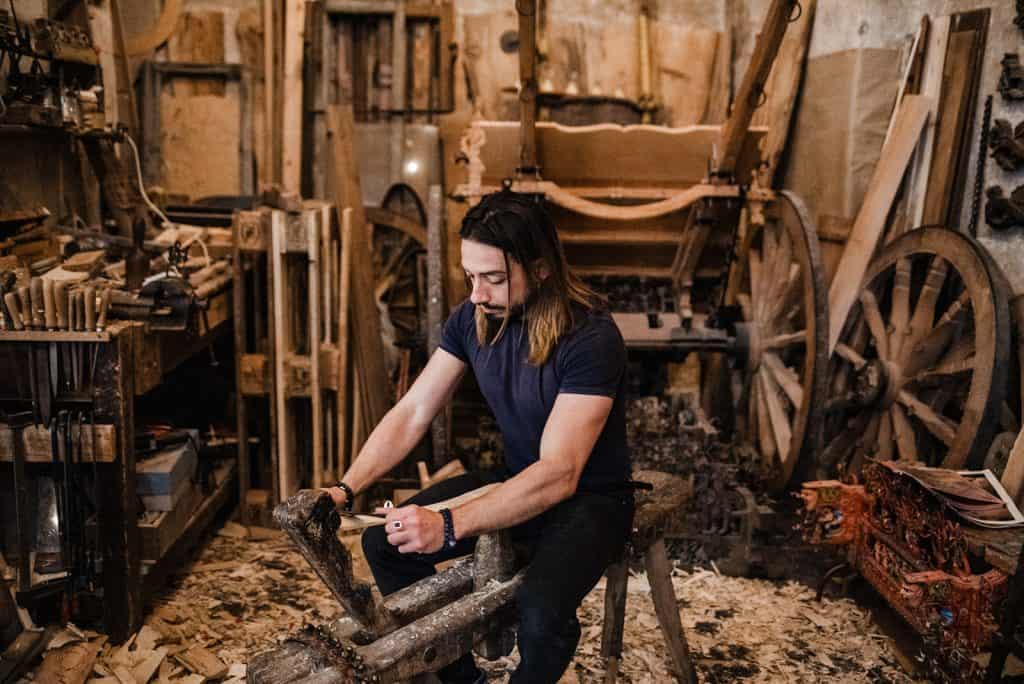
In Southern Italy, Cosimo takes us up to his terrace and demonstrates the tradition of blowing on a ceramic horn before smashing it, then invites guests to try for themselves. In Perugia, we spend time with a fourth-generation weaver who preserves medieval Umbrian and Renaissance textile techniques on antique looms from the 18th and 19th centuries. In Sicily, we visit the last traditional artisan carriage makers whose craft tells the story of an entire island.
In Puglia, we visit an olive grove with a story that stays with you long after the tour ends. Giacomo was a political journalist in Rome when his parents told him they were going to sell the family farm. He could not bear to let it go, so he left his career behind, came home to Puglia, and became an olive farmer. We visit him because his story is not just about olive oil. It is about the way Italians value the continuation of family traditions, often above money and social status, and about the relationship between a family and the land they have tended for generations. In Puglia, an olive tree is not a tree. It is part of the family.
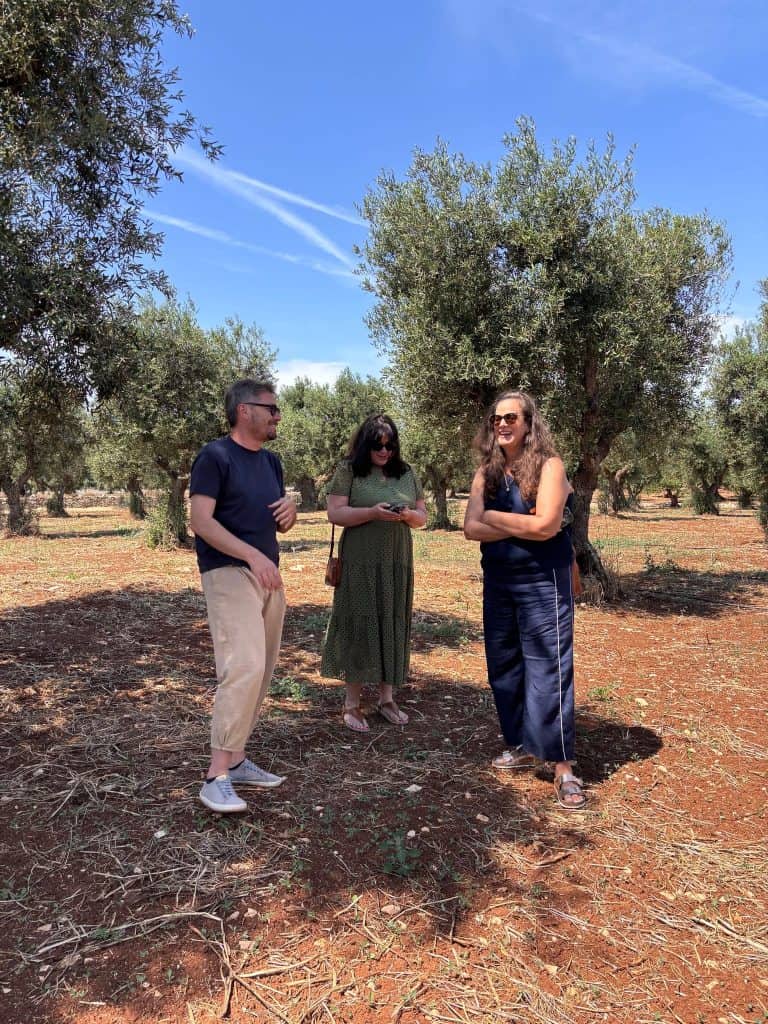
None of these are tourist stops. They are time spent with real local people that allows you to appreciate their culture, choices and way of living.
Local festivals are another opportunity to offer you a chance to see regional Italian culture in action. On our Umbria tour, we visit the Infiorata in Spello. Walking through the village the night before, guests see the whole community at work from young and old separating flower petals into color-coordinated boxes and catching up on local gossip, others on their hands and knees laying out intricate floral tapestries across the cobblestones. Watching you, our guests, take in the community spirit and commitment to time-honored traditions, is something our hosts never tire of.
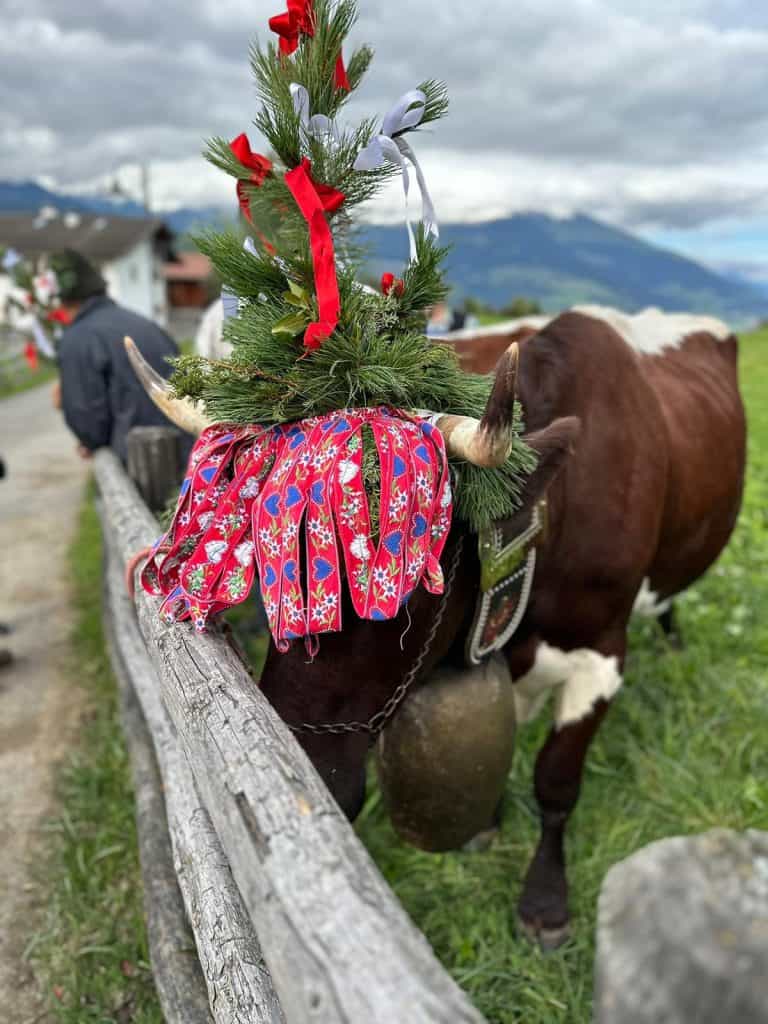
On our Dolomites tour, we attend the Almabtrieb, an ancient alpine tradition celebrating the animals returning from the mountain pastures to the valley ahead of winter. The cows come down with flowers in their hair. Locals dress in lederhosen and traditional costume. There is funnel cake, locally brewed beer, and at some point, everyone breaks into song. This is not a staged event or a tourism promotion. It is a celebration for locals, and something they generously share with you, as visitors.
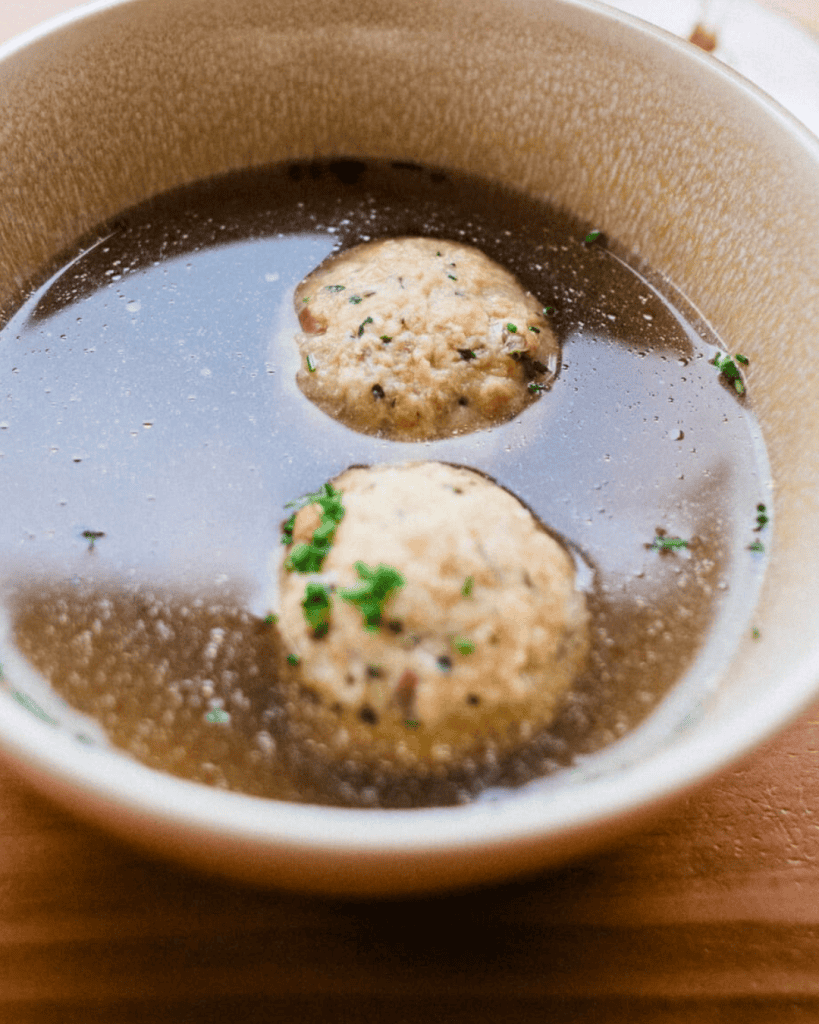
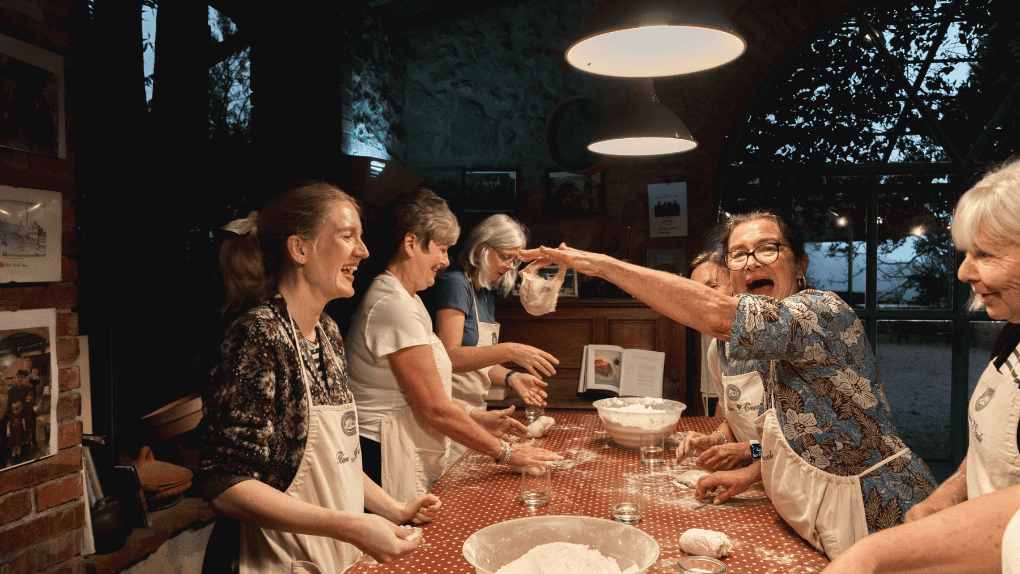
Food is central to Italian culture and central to every Untold Italy tour. On our Piedmont tour, you do not eat carbonara. You eat tajarin or agnolotti al plin – dishes that belong to that specific place and nowhere else. In Sicily, a cooking class means learning to make busiate. In the Dolomites, it is canederli: bread dumplings filled with edible flowers and served in broth.
In the Cinque Terre, a local pasta filled with potato and cheese served with a mint sauce, followed by an extra virgin olive oil cake rather than a clichéd tiramisu. A guest once asked why Barolo was not on the table during our Emilia Romagna tour. Our host explained that Barolo is from Piedmont, not Emilia, and introduced the group to bubbly Lambrusco served alongside local antipasti of rich cured meats and gnocco fritto, with the important cultural context that the bubbles exist precisely to cut through the richness of the region’s cuisine. Eating and drinking locally is not a preference. It is a form of respect.

The same applies to the activities we choose. Truffle hunting has become a tick-the-box tourism experience that almost every region in Italy now offers. We only include a truffle hunt in regions where it carries real cultural significance, Piedmont being the clearest example. And when we do, you participate in a real hunt, not a staged one. That means you may not find truffles. But what you will find is something more interesting: the social history of the hunt, and the relationship between a hunter and his dog, built over years of quiet trust. Our host also shares the environmental context, including how climate change is affecting truffle harvests in ways that local communities are only beginning to understand.
Small groups make all of this possible. Twelve people can step inside a family home, a village church, an artisan workshop, or a forest without overwhelming the place or the people in it. A group that size gives our hosts the time and space to notice the small moments of local culture like a gesture, a ritual, an offhand comment from a local and share them with guests before they pass.
Keeping the benefit in the community
Where your money goes matters as much as where you go. On a large coach tour, that money flows through logistics providers, international hotel chains, and restaurants built to handle volume. On an Untold Italy tour, most of it stays with the people who live and work in the places you visit. Your guides are local, hired in each region for their expertise and paid properly for it.
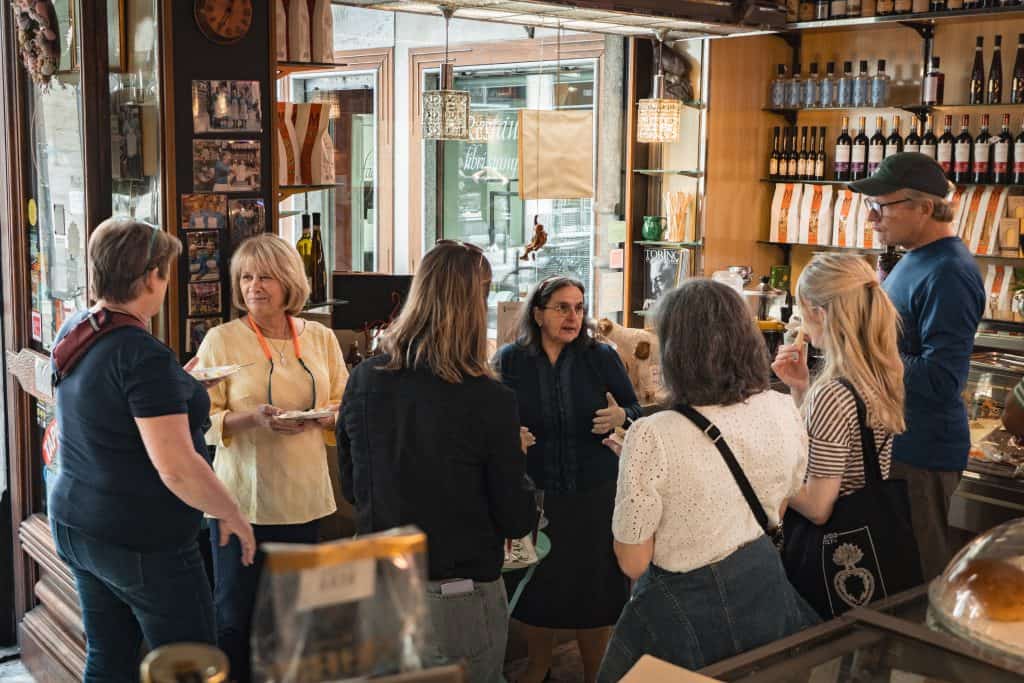
We actively seek out Italian women-owned businesses. All of our hosts are women living in Italy and building their lives there and many of our guides are Italian women too. We visit women winemakers and farmers like Valentina in Tuscany and the Queen of Timorasso in Piedmont. Women in the Italian hospitality and food industry have historically had fewer opportunities than their male counterparts, and where we have a choice, we choose them.
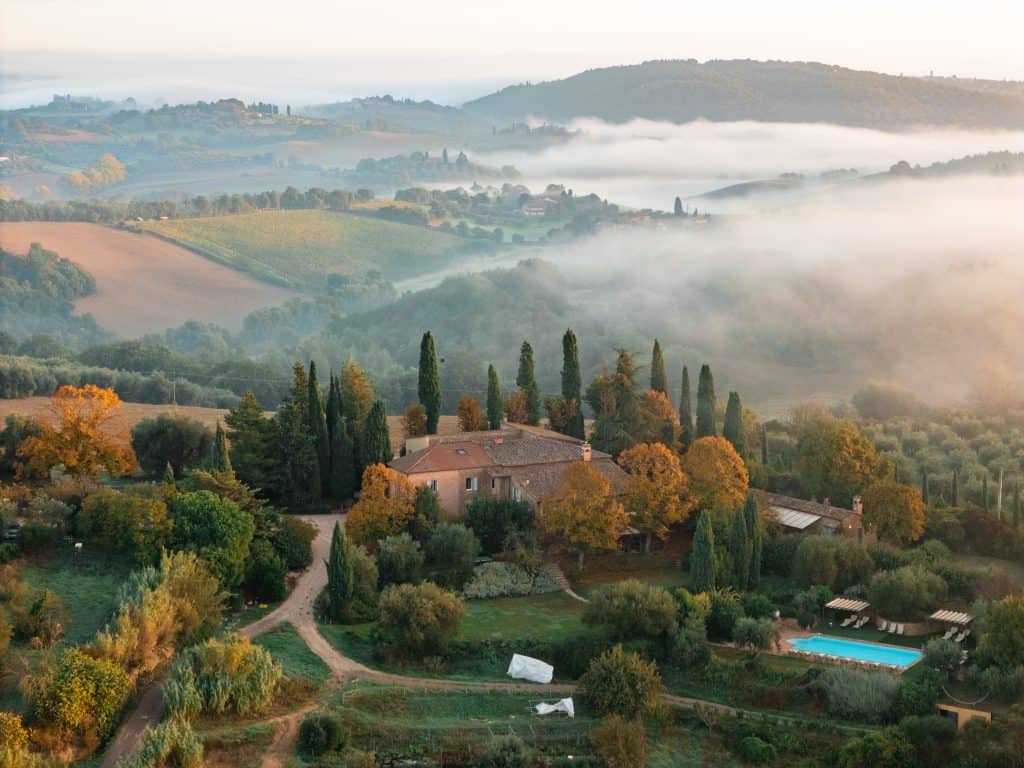
We stay in small, locally owned properties including agriturismi, palazzi and country houses, usually with no more than ten rooms. On our Northern Italy tour, we stay at a palazzo run by three local sisters. In the Langhe, we stay at a country house run by Nadia, a Piemontese architect whose focus on green building and local tradition extends to her Slow Food membership and her deep knowledge of the region’s food and wine. Near the Cinque Terre, we stay in a former Franciscan abbey now run by two local women.
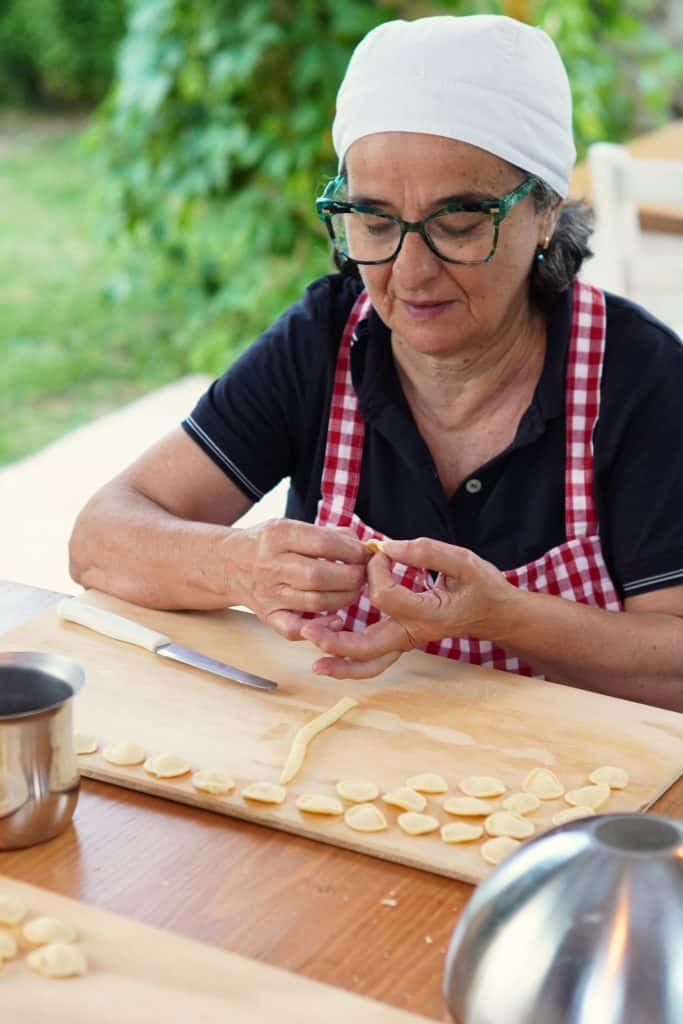
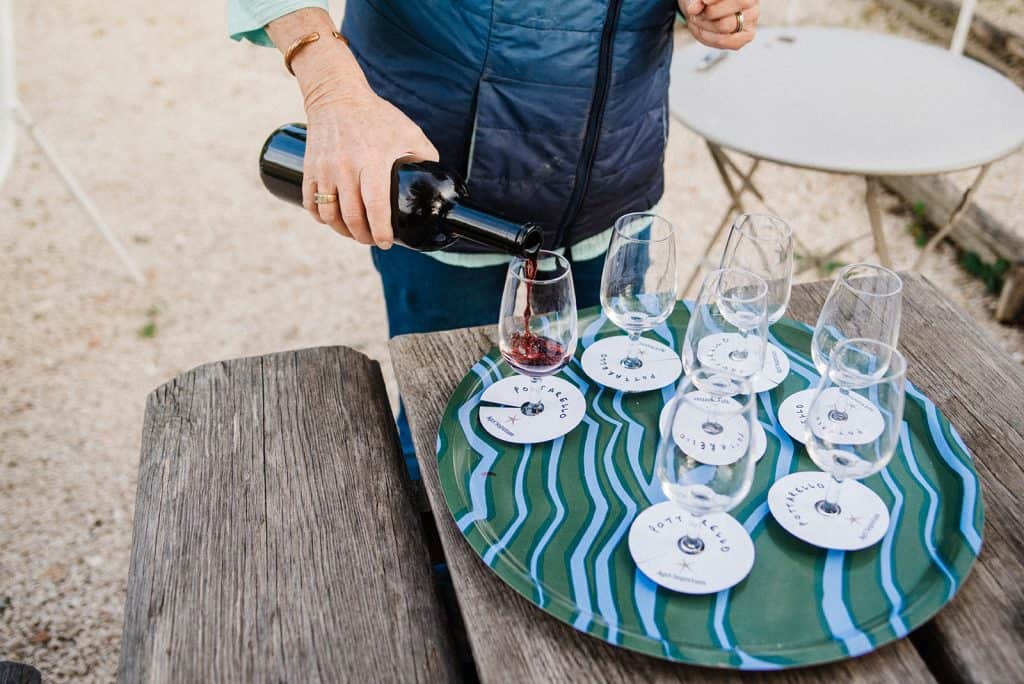
Almost every meal on tour is at a locally run restaurant chosen for its regional, seasonal food and many of them are members of Slow Food Italia or sourcing their ingredients at zero kilometers. The wineries we visit are almost always organic, often biodynamic, and typically members of FIVI – the Federazione Italiana Vignaioli Indipendenti, an association of independent winemakers committed to working their own land. We are not taking you to a large estate with a tasting room built for groups. We are taking you to the people who made the wine.
A group of twelve can give meaningful business to places a large coach tour could never visit: a family kitchen with six tables, a single artisan with a workshop the size of a garage, a producer who opens their home because they know our host personally. That is not an accident. It is how we build every tour.
We are members of ETOA and the Adventure Travel Trade Association — two bodies that hold tour operators to responsible standards. We treat our local partners as partners, not suppliers, and we have genuine long-term relationships with them.
Caring for the places we travel through
Visiting a place always has an environmental impact, and it is something we think carefully about when we design our tours.
We host a maximum of twelve guests because a smaller group leaves a lighter mark whether we are on a coastal path, in a mountain village, or at an artisan workshop. It is also what allows us to stay in small, family-run properties rather than chain hotels, which means the environmental and economic benefit of our visit stays local.
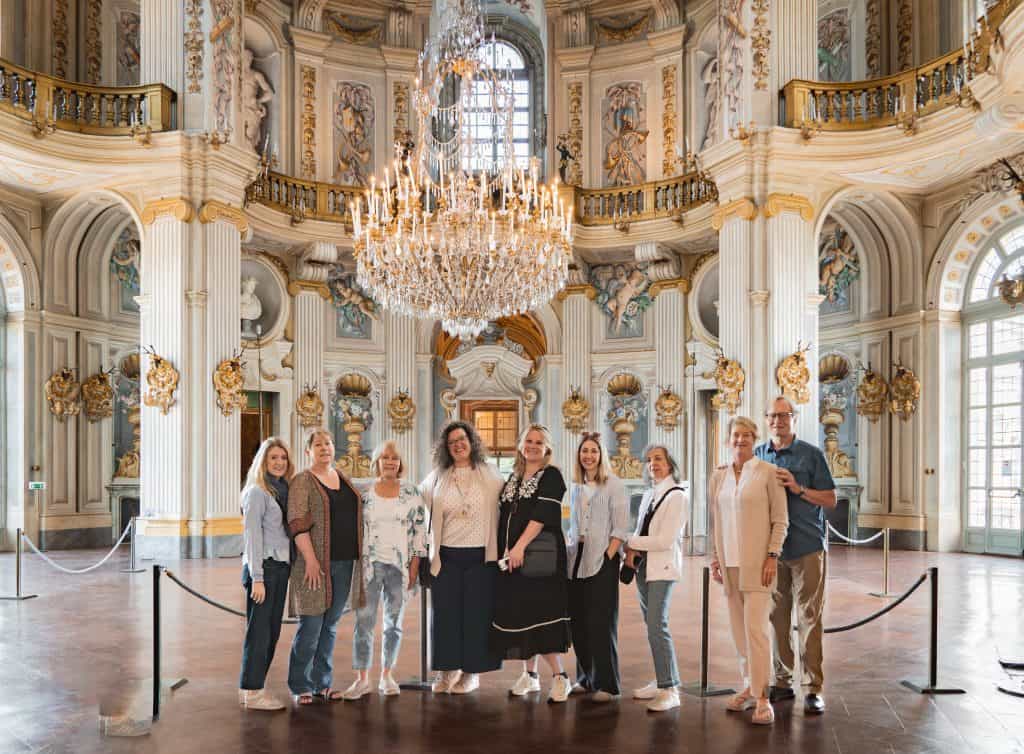
We design our tours around one region rather than covering the length of Italy, which significantly reduces the distance traveled between stops. We think carefully about where guests are based and what that means for the places nearby. On our Cinque Terre tour, we do not stay in the Cinque Terre itself, instead, we base guests in a quieter town nearby and use the train to get in, supplemented by a private boat, to minimize our contribution to the overcrowding that is genuinely damaging that coastline. On our Tuscany tour, we do not stay in Florence but get out into the countryside, where the pace is slower and the impact lighter.

We eat in restaurants that source local, seasonal ingredients, which in Italy is less a sustainability policy than a cultural default, and one that keeps supply chains short and food considerably better.
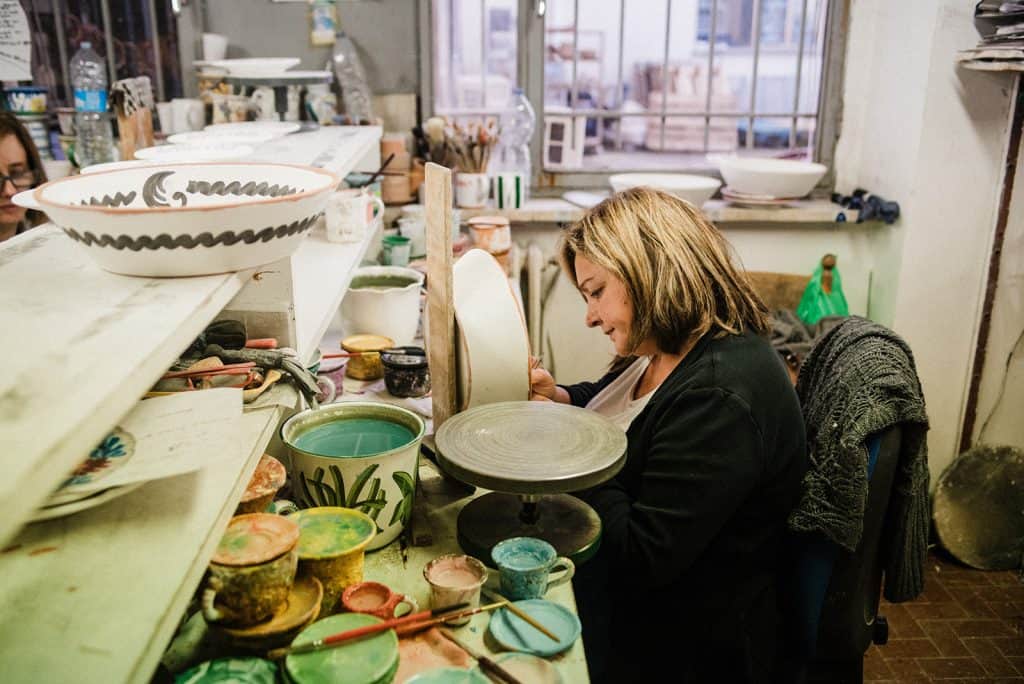
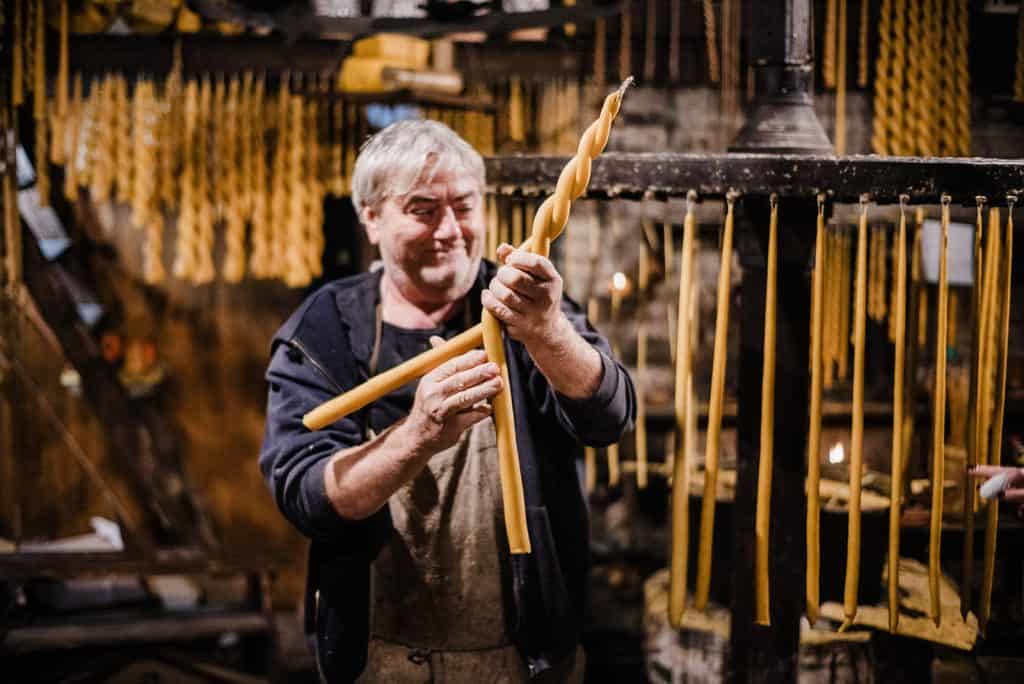
The artisan workshops and family businesses we visit are ones where our presence has a real and lasting benefit. In Umbria, we visit a tiny medieval paper maker and a medieval candlestick maker in a town with very low tourism numbers coming through. Our visits help these tiny operations stay viable and pass their skills on to the next generation.
We do not offer truffle hunts on tours running in May, when they are banned to protect the forest ecosystem and support the natural biological reproduction cycle of the truffle. We are aware of operators who choose to disregard this. We do not.
Every guest receives a reusable water bottle at the start of your trip and you are encouraged to refill at fountains during the day. This is to reduce our footprint of plastic waste. It is a small thing and also the kind of small thing that adds up across over a week of travel.
In all honesty, this is the area where we have the most work ahead. Measuring our footprint, setting clear reduction targets, and formalizing our environmental commitments are things we are actively working on. We are currently exploring certification including the GSTC standard, and we will share our progress as we go.
How we hold ourselves to account
None of this counts for much without a way to stay accountable. We are working on certification so our commitments are documented and on the record. We listen to guest feedback and act on what is not working, and around a third of our guests come back, which tells us when we are getting it right. Our ETOA and Adventure Travel Trade Association memberships add outside standards to our own. This is the start of the work, not the finish, and we will report on our progress as we go.
Your Italy, still here next time
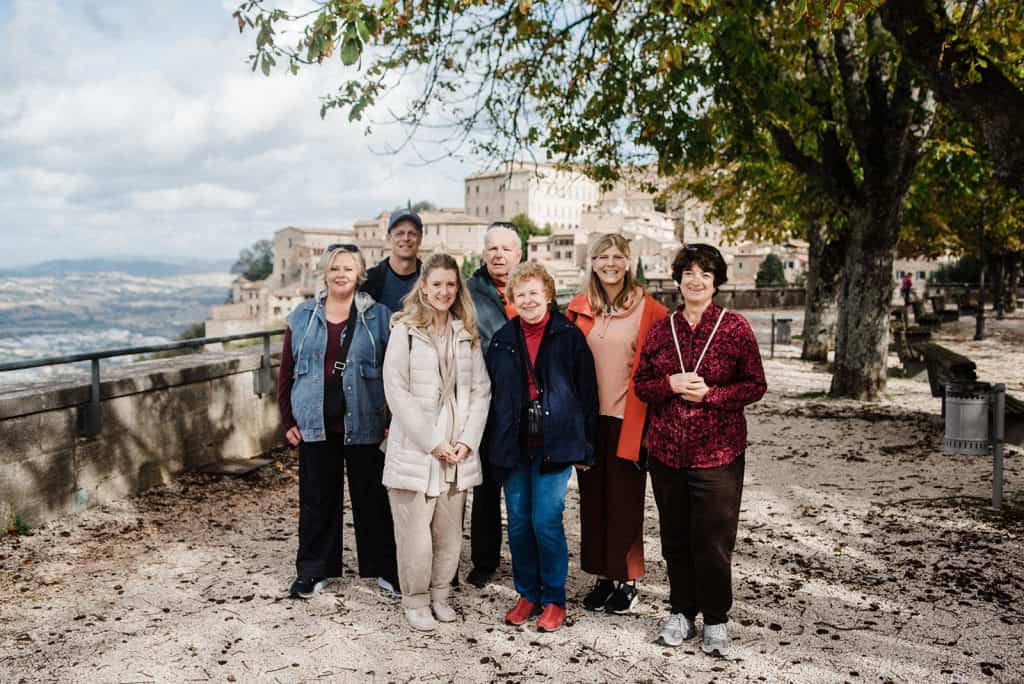
The Italy you want to feel part of only stays that way if it is looked after. Traveling in a small group, with local people, at a pace that lets a place breathe, is one way you help that happen. That is the trip we want to host, and the one we think is worth taking.